How Much Does a Trained Family Protection Dog Cost? What the Price Should Include
How much does a trained family protection dog cost?
Back to the Blog
Short Answer: Family Protection Dog Cost
At Canine Protection International (CPI), Elite Family & Estate Protection Dogs start at $100,000 (USD). The final proposal identifies the recommended dog's price, included services, and any additional expenses. Across providers, compare selection standards, demonstrated training, household fit, delivery and handling instruction, and continuing support, not price alone.
A family protection dog should be a dog you enjoy living with, whose preparation and support give you confidence in the decision. Understanding the price means evaluating the individual dog, its demonstrated training, its fit with your household, and the people responsible for the placement.
A starting price is not a final proposal. Before committing, confirm the price of the recommended dog, what delivery and instruction include, any travel expenses, and the terms governing additional services. That distinction makes the investment easier to understand and prevents avoidable surprises.
For the wider decision, our family protection dog buying guide explains how cost fits alongside temperament, health, control, and household compatibility.
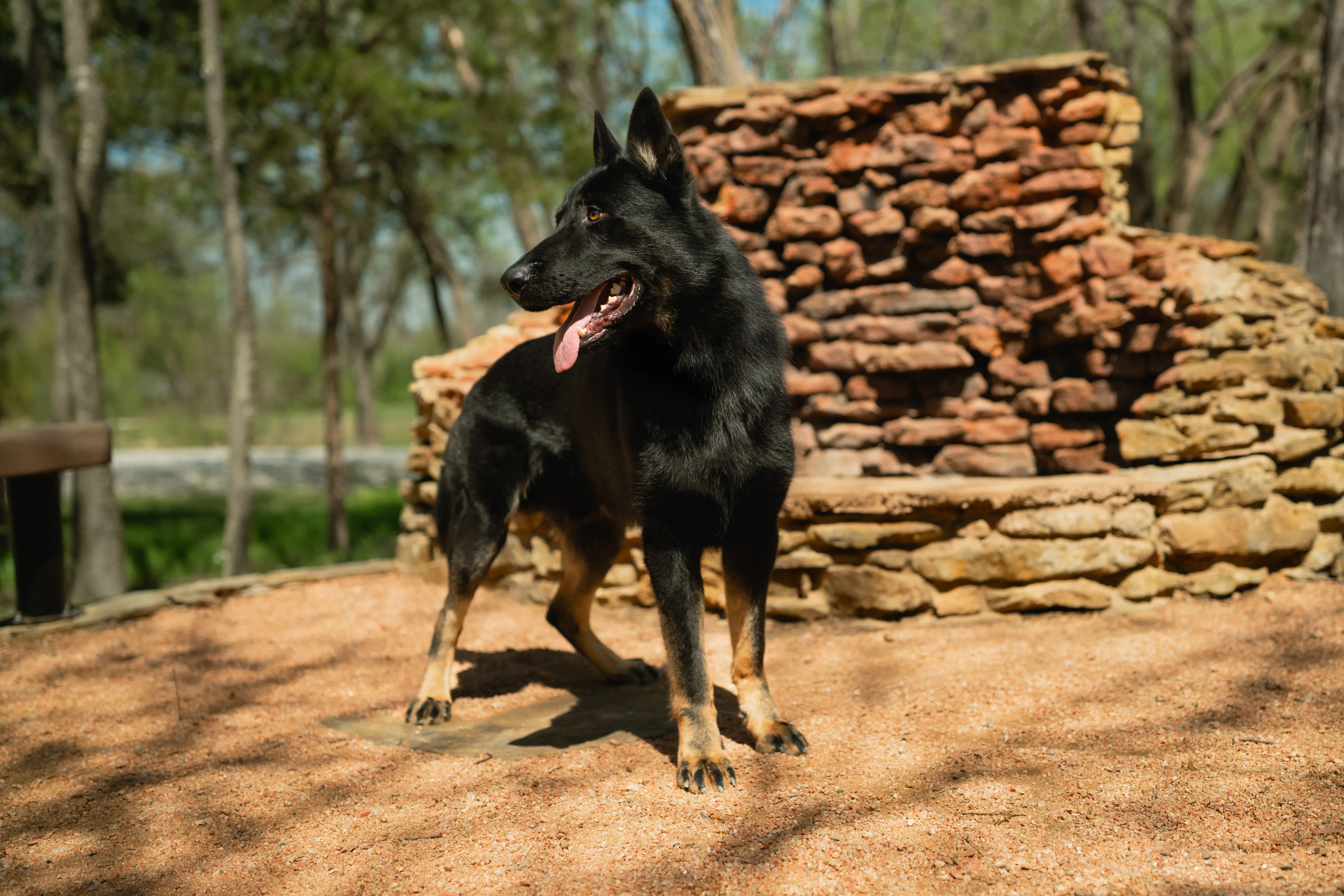
What Determines Family Protection Dog Cost?
Training is one part of the work. A finished placement also depends on selecting a suitable dog, observing it over time, preparing it for daily life, and teaching the family how to handle it. A dog can have impressive abilities and still be an unsuitable recommendation for a particular household.
At Canine Protection International, we begin with the people and routines the dog will join. A family with young children, cats, frequent visitors, and regular travel needs a different evaluation from a client whose dog will primarily accompany one adult at home and at the office. The purchase should reflect that individual judgment.
Family protection dog cost includes the work of selection
Not every candidate becomes a CPI dog. We may purchase a young adult and spend several months training and living with that dog before deciding it does not meet our full standard. If it falls short in health, family temperament, control, or suitability, it is removed from our protection-dog placement program, regardless of the time or money invested. We then seek an appropriate alternative role or home for that individual. The investment never becomes a reason to lower the standard.
This matters when comparing prices because the work behind a placement is not limited to the hours a client sees on video. It includes the judgment to decline a candidate or wait for a better match. Ask what would disqualify a dog and who has authority to make that decision.
Why months of daily training affect the price
CPI is not simply purchasing dogs and offering them for resale. The young adults we purchase spend six months to a year with us, sometimes longer, in our training program. They live with us, accompany us in everyday life, and are developed and evaluated across the settings a family will share with them. This requires substantial skilled labor and daily involvement, not just scheduled training sessions. That sustained work is a significant part of the cost of a CPI placement.
Preparation should be demonstrated in everyday settings
An obedience routine in a familiar training area tells you something, but not everything. Families need to understand how the dog behaves inside a home, around ordinary distractions, with visitors, and during the transitions between activity and rest.
For protection work, look at the whole sequence. The dog should remain responsive to the handler, release and disengage clearly, and return to calm. A short clip of engagement cannot establish those qualities. The relevant question is how the preparation will translate to your life.
The family needs instruction too
A highly trained dog arrives with an established language. The people living with it need to understand that language and become comfortable using it. Personal delivery should give the family hands-on experience, with instruction tailored to the home and the people who will handle the dog.
At CPI, owner Alex Bois personally delivers every dog and spends three full days teaching the family. The objective is for the full training to transfer to the owners without requiring toys or treats to produce the trained response, with direct access to Alex and lead trainer Abby afterward. Confirm the arrangements for your location during consultation, including any additional expenses.
What Should a Written Protection Dog Proposal Explain?
A useful proposal makes the recommendation understandable. It should identify the dog, explain why that dog suits the household, and distinguish completed preparation from anything still to be addressed before delivery.
The financial information should be equally clear. Ask which services are included in the placement price, which expenses are additional, and what happens if timing or circumstances change. Payment terms, health provisions, and any remedies belong in the current agreement, not in assumptions drawn from a sales conversation.
Compare scope, evidence, and expenses
This comparison is useful at any price point. It does not presume that a higher price means better work or that a lower price means an unsuitable dog. It asks each provider to explain the offer in terms you can verify.
What CPI's Protection Dog Price Represents
CPI's Elite Family & Estate Protection Dogs are selected and developed for family life, real-world control, and handler-directed protection. The process includes health evaluation, recommendation-led matching, private preparation updates, personal delivery, and lifetime support.
CPI accepts no more than twelve placements each year. One dog is one placement, even when two dogs join the same household. That limit protects the time needed for individual development, owner involvement, delivery, and continuing relationships. It is a capacity standard, not a reason to rush a decision.
Family temperament comes first. A dog should be affectionate and socially appropriate, able to settle at home, and naturally responsive to its handler. Serious capability only belongs in family life when control and household suitability are developed with equal care.
Lifetime support at CPI means that clients can continue to turn to Alex and Abby for questions, guidance, and help as life changes. Confirm the arrangements and costs for any additional on-site work or travel. A lasting relationship is important; a clear description of services is important too.
Puppy vs. Trained Adult: Different Financial Decisions
A puppy's purchase price and a finished adult's placement price do not cover the same thing. With a puppy, much of the development lies ahead. Promising early traits can inform selection, but they cannot guarantee the adult dog's temperament, health, suitability for protection work, or fit with your family. That uncertainty remains whether you raise the puppy yourself or pay a company to raise and train it for you.
Committing to a specific puppy and waiting as long as two years for the finished dog carries substantial risk. You are making a financial and emotional commitment before anyone can demonstrate the outcome you are expecting. More time in training does not guarantee that an unsuitable candidate will become the right protection dog. Before making that commitment, understand what happens if the puppy does not develop as hoped, including whether you must accept that dog, can be offered a different candidate, or can recover your payment.
This is one reason CPI generally purchases candidates at around twelve months old, sometimes slightly older. At that stage, we have a clearer view of the individual dog’s core temperament, confidence, and social behavior than we could have in early puppyhood. The dog is still developing, so evaluation continues. We build on that more established foundation through six months to a year or more of daily preparation, with the aim of bringing out the individual’s full potential before placement.
A carefully evaluated adult offers more evidence about the dog you are bringing home. You can assess mature size, observed behavior, existing skills, and the trainer's experience of living with that individual. That does not eliminate future responsibility, but it changes what can be known before the decision.
Raising a puppy can be a rewarding choice for someone who wants that experience and will love the dog even if it never qualifies for protection work. It should not be presented as a guaranteed lower-cost route to an equivalent outcome. Our comparison of a trained adult protection dog and raising a puppy explores that decision in more depth.
The Company Behind the Dog Is Part of the Investment
Pay attention to the first conversation. Is the company learning about your family, routines, experience, and expectations before recommending a particular dog? Enthusiasm for a dog is understandable, but a recommendation should follow an understanding of your household. If the conversation moves toward a purchase before that understanding is established, slow down and ask how the match is being made.
Dog training is largely unregulated as a profession. That does not mean no laws apply. For example, USDA regulates dogs imported into the United States for resale. A protection-dog label is not, by itself, evidence of a consistent selection or training standard. Ask who sets the standards, how they are demonstrated, and who stands behind the placement.
Get to know the people as carefully as the dog. Do they listen, explain their decisions clearly, and make you comfortable asking difficult questions? Ask for client references and find out who responds after delivery, how concerns are addressed, and how additional in-person help can be arranged if needed. You are choosing a living family member and a continuing relationship with the people responsible for its preparation. Confidence in that relationship should rest on both personal trust and clear commitments.
Step-by-Step Guide to Comparing Protection Dog Proposals
Step 1: Describe the household before requesting a recommendation
Include children, other animals, regular visitors, staff, travel, and the adults who will handle the dog. Explain what daily companionship should feel like. A meaningful proposal begins with those details, rather than a preferred photograph or an arbitrary deadline.
Step 2: Ask for a dog-specific explanation
Have the provider describe why the recommended dog fits your family and what observations support that judgment. Ask about energy, affection, response to unfamiliar people, and the handling qualities relevant to your experience.
Step 3: Review training and health evidence
Request complete demonstrations and relevant veterinary records. Keep a distinction between what you have seen, what has been explained, and what remains unanswered. Our guide to choosing a protection dog company provides questions to take into those conversations.
Step 4: Separate the price into included and additional items
Confirm delivery labor, travel, instruction, equipment, and any follow-up services that affect the total. Ask for the delivery and travel arrangements to be specified in your individual proposal.
Step 5: Read the current agreement
Understand payment conditions, the health provisions, responsibilities after placement, and the process if a concern arises. Obtain professional advice on contractual or coverage questions where needed. Marketing copy should help you ask better questions, not replace the agreement.
Step 6: Decide on fit and confidence
Make the decision when the dog, people, evidence, and terms align. Waiting for an appropriate recommendation can be the right outcome. The goal is a relationship your family will value long after the purchase is complete.
Protection Dog Cost FAQs
How much does a trained family protection dog cost?
Canine Protection International's Elite Family & Estate Protection Dogs start at $100,000 (USD). The final proposal should confirm the recommended dog's price, included services, and applicable additional expenses. Compare other providers' prices against their actual selection, preparation, delivery, and support, not the program name alone.
Does a higher price guarantee a better dog?
No. Price does not prove temperament, health, control, or compatibility with your family. A higher investment should be supported by a clear process, dog-specific evidence, thoughtful matching, and meaningful service. Ask the same detailed questions regardless of the quoted amount.
Is personal delivery the same as transportation?
No. Transportation moves the dog between locations. Personal delivery includes helping the family learn the dog and practice handling in relevant settings. Confirm who will provide that instruction, what is covered, and which labor and travel expenses are included.
Are sport titles enough to justify the price?
A sport title can document achievement in a defined discipline. It does not independently establish family suitability, household compatibility, or completed preparation for private protection. Consider it alongside the dog's behavior, health records, real-life experience, and handling transfer.
Is buying a puppy always less expensive overall?
The initial price may be lower, but it is a different undertaking. Paying to have a puppy raised and trained does not guarantee it will qualify for protection work or suit your household as an adult. A long development period can involve substantial investment without resolving that uncertainty. Understand the outcome provisions before committing to a particular puppy.
What does lifetime support mean at CPI?
CPI clients retain access to owner Alex Bois and lead trainer Abby for questions, guidance, and help with the continuing relationship. Additional training can be discussed when useful. Confirm any on-site service and travel arrangements separately rather than assuming every future service is included at no charge.
Why does CPI evaluate candidates for months before placement?
At CPI, living and working with a dog over six months to a year, sometimes longer, gives us repeated opportunities to evaluate family temperament, everyday behavior, and control while developing its abilities. A dog must continue meeting our standards throughout that process. If it does not, we will not offer it as a CPI protection dog, regardless of our investment.
What if the right dog is not available within my timing?
Discuss timing early and be willing to reconsider the schedule. An appropriate match should not be compromised to meet a preferred date. CPI's recommendation-led process gives priority to the fit between the individual dog and the household.
Choose the Complete Placement
The useful question is what your investment prepares you to live with: a suitable dog, clear handling, a considered introduction to family life, and people who remain available afterward. Evaluate those elements together and insist on clarity about the financial terms.
To discuss your household, current pricing, and the right next step, request a private consultation with CPI.
About the Author
Alex Bois is the owner and head trainer of Canine Protection International in North Texas. He oversees dog selection, training, household matching, and personal delivery, and remains directly involved in client support after placement.