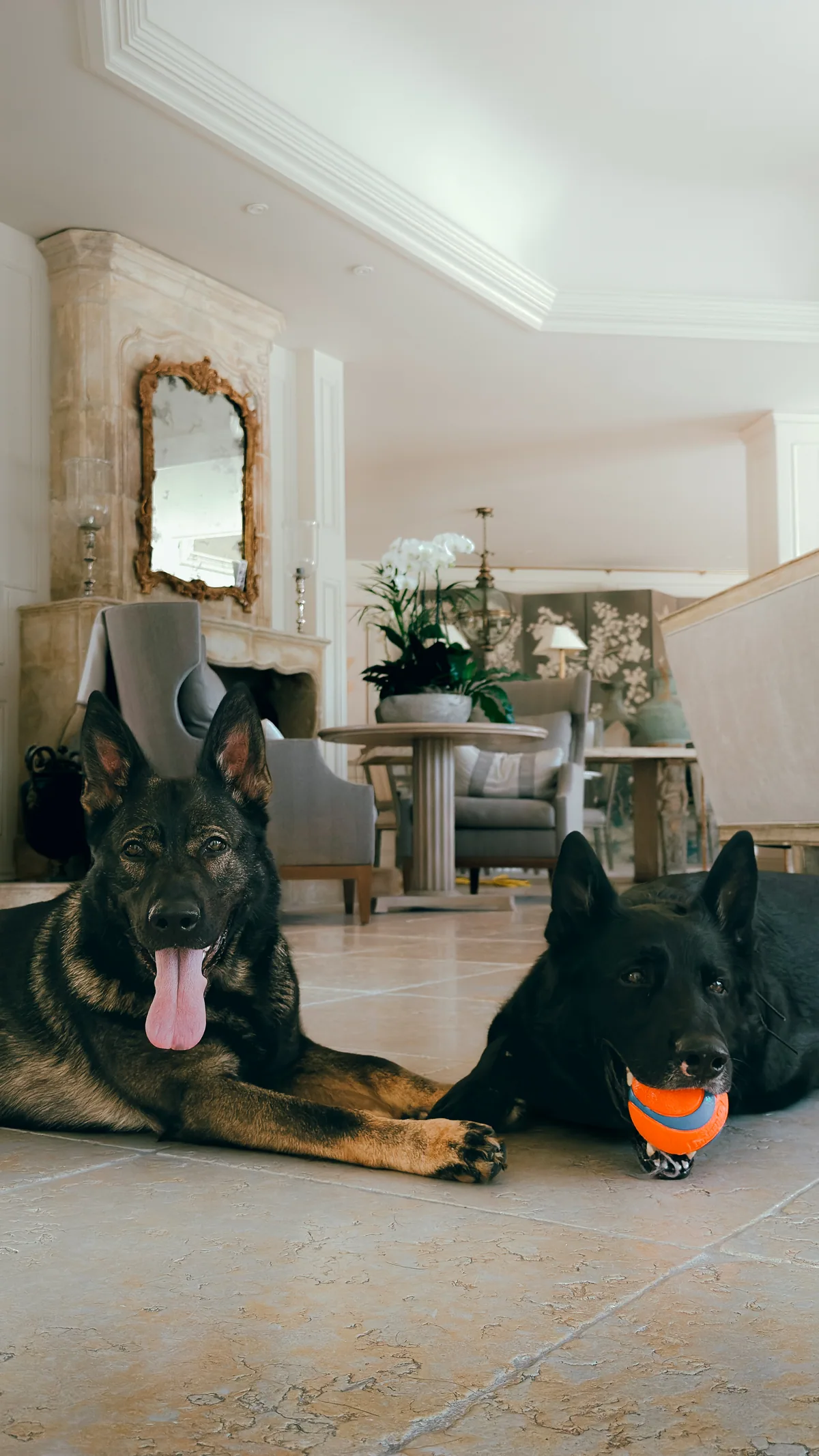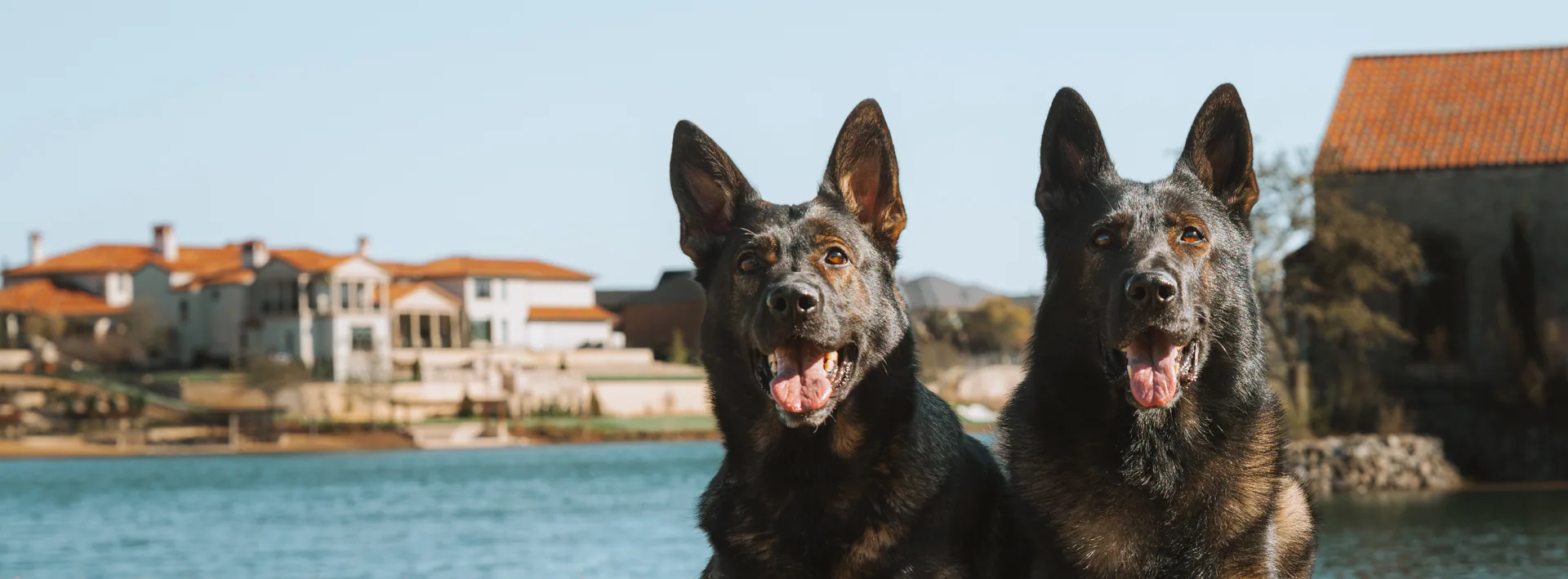
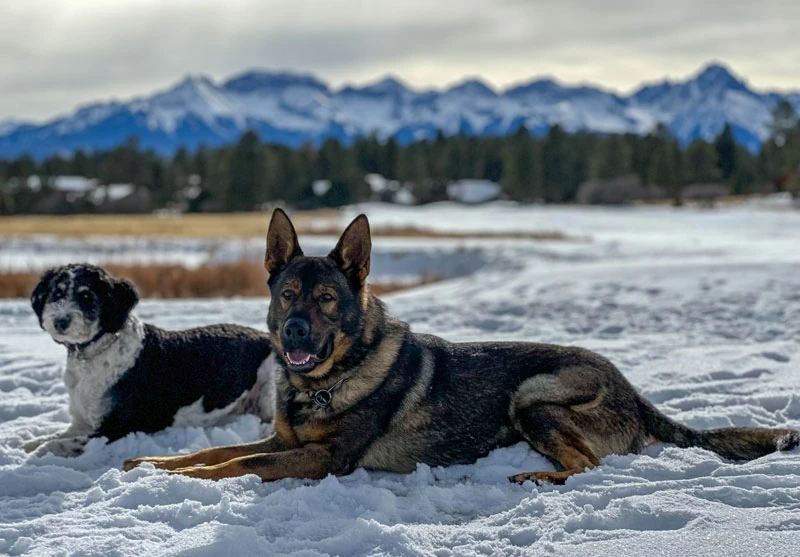
Argo, a CPI German Shepherd, resting with a companion dog at his new home in Colorado, circa 2024
Argo at his new home in Colorado, circa 2024
CPI Background

CPI Protection Dog Training Program Background: Three Decades of Refining the Work

Canine Protection International developed its family protection dog training standard by studying the strongest ideas in working-dog sport, police K9 training, industrial security, and executive protection. The purpose was always different: create family protection dogs capable of real-world protection, directed by their handler, and comfortable in daily life.

History reviewed by Alex Bois, owner of Canine Protection International.

Begin a Private Conversation

The program began with one question: How do we create a highly capable protection dog that is easy to live with?

Established 1996
The Original Question

How can a dog be highly capable and still be easy to live with?

From the earliest days of CPI, the goal was to produce reliable obedience, protection, and manners in the environments where clients actually live. A family protection dog could not be evaluated only by what it performed on a field. The work had to remain clear inside the home, around guests and children, in public, and under pressure.

Europe offered deep traditions in dog behavior, competitive performance, police K9 work, and canine security. CPI studied those disciplines because each contained part of the answer. Precision, motivation, pressure-tested performance, control, and handler protocol all mattered.

The larger judgment was deciding what belonged in private family life, what required further development, and what should be left behind. That process became the historical foundation of the CPI program.
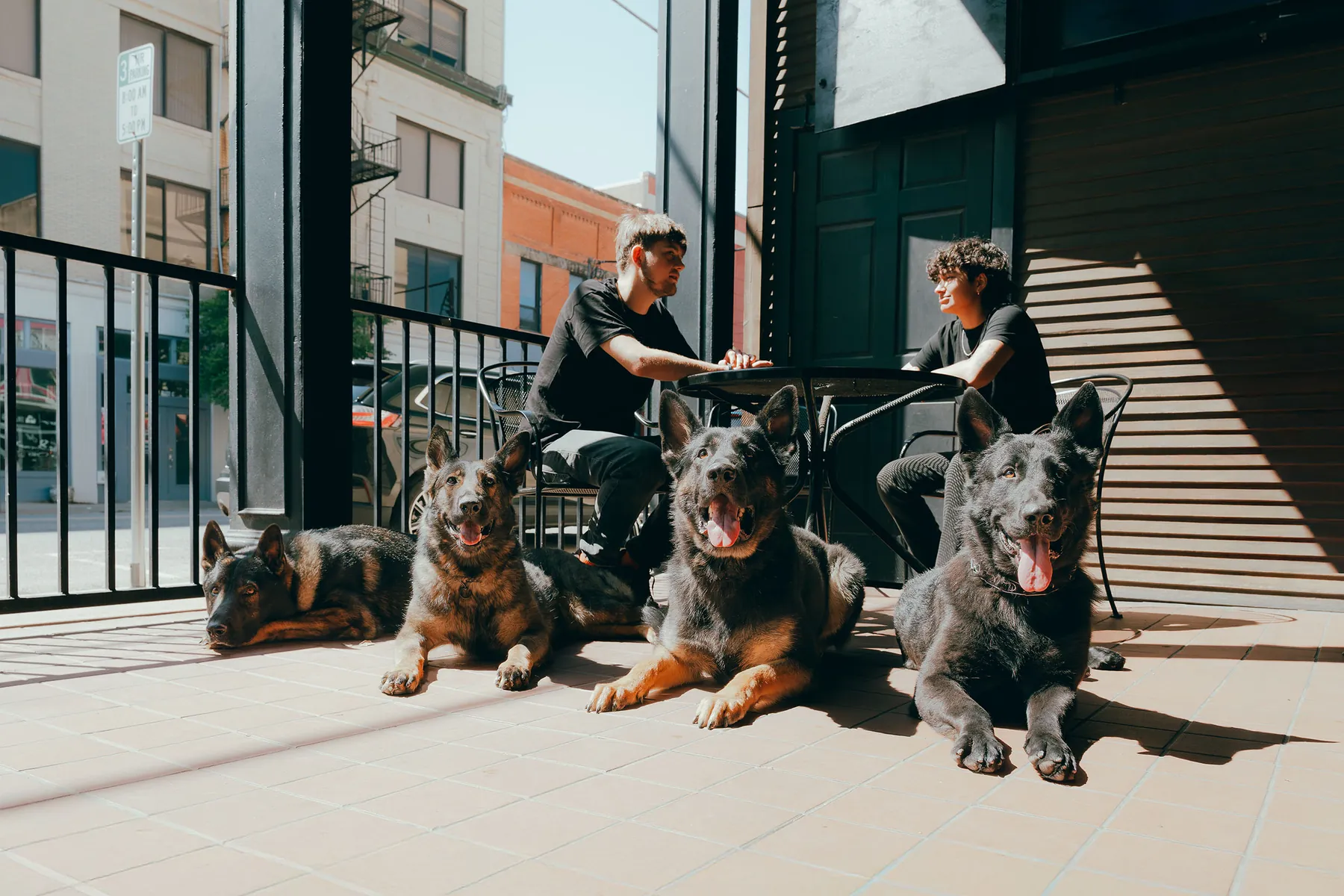
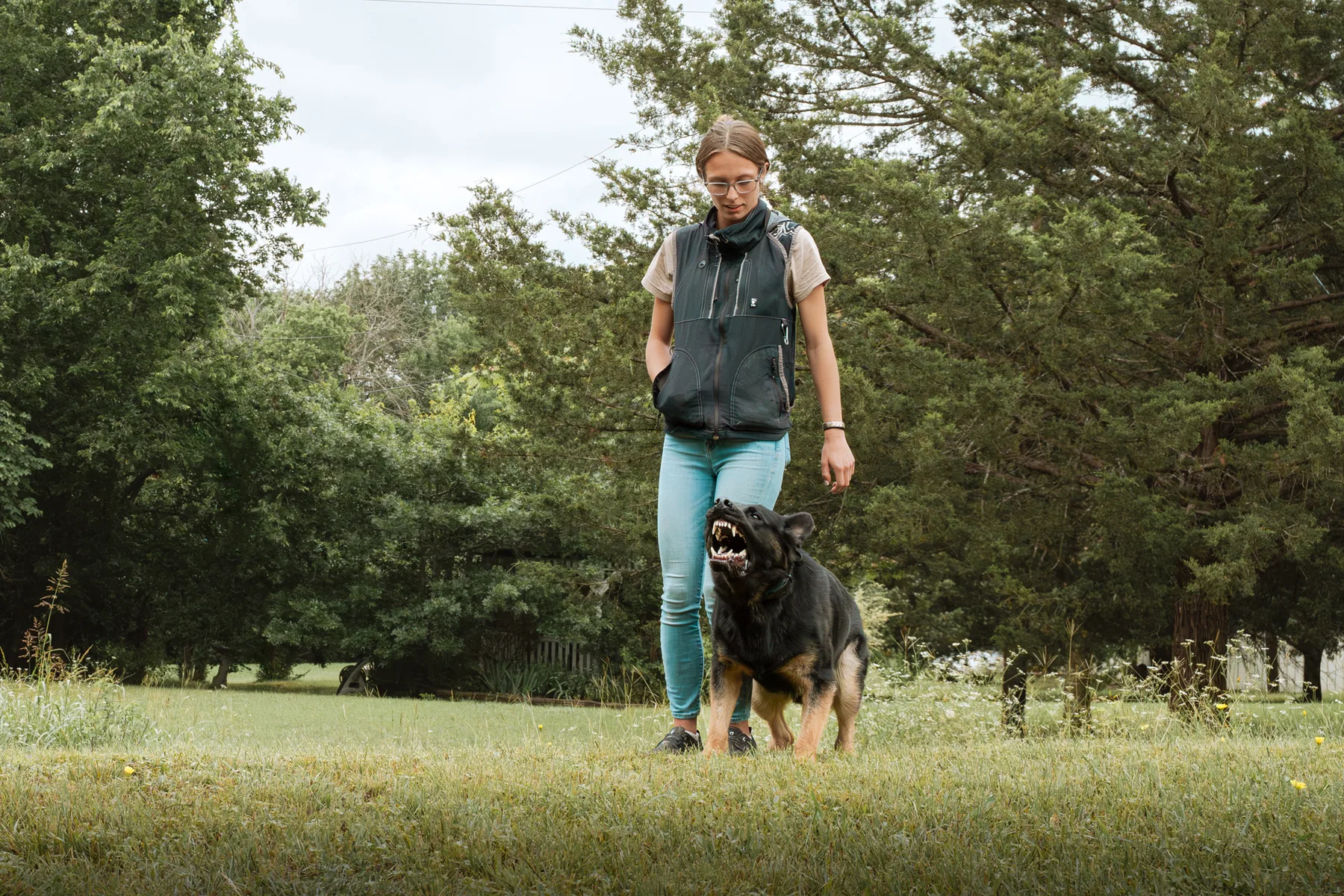
The disciplines were the foundation. They were never the finished program.
Foundations of the Work

Drawing on the best of every discipline.

CPI’s training-program development was not an attempt to reproduce another discipline. It was a process of understanding what each field did well, then adapting those lessons to the responsibilities of a privately owned protection dog.

01

European working sports

Schutzhund, French Ring, KNPV, and related disciplines contributed a deeper understanding of drive, motivation, precise obedience, and the mechanics of protection work.

02

Police K9 work

Law-enforcement programs demonstrated functional engagement under pressure. CPI retained that seriousness while developing the additional precision and everyday control private families require.

03

Industrial canine security

Leading security programs showed that high motivation, functional protection, and exact control could coexist. Their example reinforced the value of studying specialists across disciplines.

04

Executive protection

Security professionals helped shape handler protocol, positioning, and clear response under direction. The owner’s decisions, not the dog’s assumptions, became central to the system.

CPI family protection dog training in a public environment
Public environments
CPI handler-directed protection training with a German Shepherd
Handler direction
Two CPI German Shepherd protection dogs resting calmly on a bench in a public plaza
Real-world control
From the CPI Archives

A classic look at CPI with Dr. Mark Levin.

Dr. Levin shares life with Trajan and Quintus, his CPI protection dogs, from off-leash handling in downtown Boston to handler-directed protection.

Dr. Mark Levin · Trajan & QuintusCPI Archive · 2009 · 4:26
The Defining Judgment

Protection belongs under the handler’s direction.

Private clients need a dog that can move safely through family life, visitors, service providers, travel, and public environments. Asking the dog to interpret every ambiguous movement as a threat creates uncertainty where clarity is required.

CPI concluded that most family protection dogs should remain socially appropriate and calm until the owner gives a clear direction. When protection is required, the dog must respond decisively. When told to disengage, the dog must return to control.

This principle of handler-directed protection became one of CPI’s most important distinctions. The handler owns the decision. The dog provides the capability.

Capability without control is not the CPI standard.
Two CPI protection dogs enjoying downtime in Carmel, California
Two CPI dogs enjoying downtime
in Carmel, California
CPI protection dog training for functional obedience and control
From Influence to a CPI System

Protection training shaped for family life.

CPI expanded the strongest lessons from specialized training into a family protection dog training system of its own. Functional obedience, family temperament, handler-directed protection, controlled disengagement, environmental exposure, and personal delivery are developed as one connected standard.

Once a dog is matched, final training is shaped around the client’s household, property, travel, routines, and special requirements. The objective is not a performance that looks impressive in training. It is a dog that remains functional for the owner in real life.

Functional obedienceFamily temperamentHandler-directed protectionControlled disengagementPersonal delivery
Training Today

The methods continue to evolve. The principles do not.

Canine Protection International continues to refine the program through training, observation, client feedback, and the realities of each placement. Institutional knowledge has value only when it improves the dog’s life with the family.

What has evolved

  • Training tools and techniques continue to improve.
  • Final preparation is tailored to the client’s actual environment.
  • Lessons from completed placements inform future decisions.
  • Every dog now works toward one complete CPI standard.

What remains

  • The whole dog matters more than any isolated skill.
  • Control must remain clear in ordinary family life.
  • Protection must remain serious, functional, and owner directed.
  • Selection, delivery, and long-term support remain personal.
Background Questions

How the CPI standard was built.

CPI’s history is useful because it explains the judgment behind the program today. These answers trace how family protection dog training became a practical, handler-directed standard for real life.

How did Canine Protection International develop its family protection dog training program?

Since 1996, CPI has studied the strongest ideas in European working-dog sports, police K9 training, industrial canine security, and executive protection. Those disciplines provided valuable lessons in drive, precision, performance under pressure, and handler protocol. CPI adapted those lessons into a system designed specifically for private family life.

Why did CPI study working-dog sports, police K9 training, and security programs?

Each discipline contained part of the answer. Working sports demonstrated motivation and precise obedience. Police K9 programs showed functional engagement under pressure. Security specialists reinforced exact control and clear handler protocols. CPI did not try to reproduce those programs. It kept the principles that served private clients and continued developing what family protection required.

What is the difference between training-field performance and real-world protection?

A training field is controlled. The routine, equipment, location, and expectations are familiar to the dog. Real-world protection must remain clear inside a home, around children and guests, in vehicles, in public, and when a threat does not resemble a training exercise. CPI’s standard is built around function for the owner, not performance that depends on a particular setup.

Why did handler-directed protection become a foundational CPI principle?

Private families need clarity. A CPI dog should move calmly through ordinary life until the handler gives a clear direction. When protection is required, the dog must respond decisively. When told to disengage, it must return to control. The handler owns the decision and the dog provides the capability.

How has personal delivery influenced CPI’s training standard?

Delivery showed that a dog is not fully proven until the work transfers to the family, property, routines, and environments it was prepared to join. Lessons from completed placements continue to influence candidate selection, client-specific finishing, handler instruction, and the way CPI evaluates long-term success.

What has changed in CPI’s protection dog training since 1996?

Training tools and techniques have improved, environmental preparation has become more specific, and client feedback continues to refine how dogs are selected and prepared. CPI also moved away from public training levels so every dog works toward one complete standard for family temperament, health, real-world control, and handler-directed protection.

What has remained constant in the CPI protection dog standard?

The whole dog matters more than any isolated skill. Functional obedience must remain clear in family life. Protection must be serious, controlled, and directed by the owner. Selection, matching, personal delivery, and continuing support must remain personal. The methods continue to improve, but those principles do not change.

A Standard Built to Serve

History matters when it leads to better judgment for your family.

Tell Alex about the people, environments, and expectations the dog will need to understand. CPI will discuss whether a protection dog is the right fit and which individual dog should be considered.

Request a Private Consultation