Trained Adult Protection Dog vs. Puppy: Which Is Right for Your Family?
Trained Adult Protection Dog vs Puppy: Which Is Right?
Back to the Blog
CPI does not sell puppies. We place selected, fully trained adult protection dogs. This article compares that approach with raising a puppy so families can understand the difference between evaluating demonstrated qualities and waiting for a young dog to develop. The puppy discussion is a comparison, not an alternative service offered by CPI.
Short Answer: Trained Adult vs. Puppy
A trained adult protection dog is generally the more direct option for a family seeking demonstrated capability, an evaluated temperament, and guided handling from the start. Raising a puppy suits a family that wants puppyhood and accepts the time, care, and uncertainty involved. A puppy's pedigree and early promise do not guarantee it will become a suitable family protection dog.
Neither choice removes the responsibility to care for, exercise, and enjoy the dog. The difference is what development remains ahead, what can be evaluated before the decision, and how much of that work the household wants to undertake. Our family protection dog buying guide covers the full set of placement considerations.
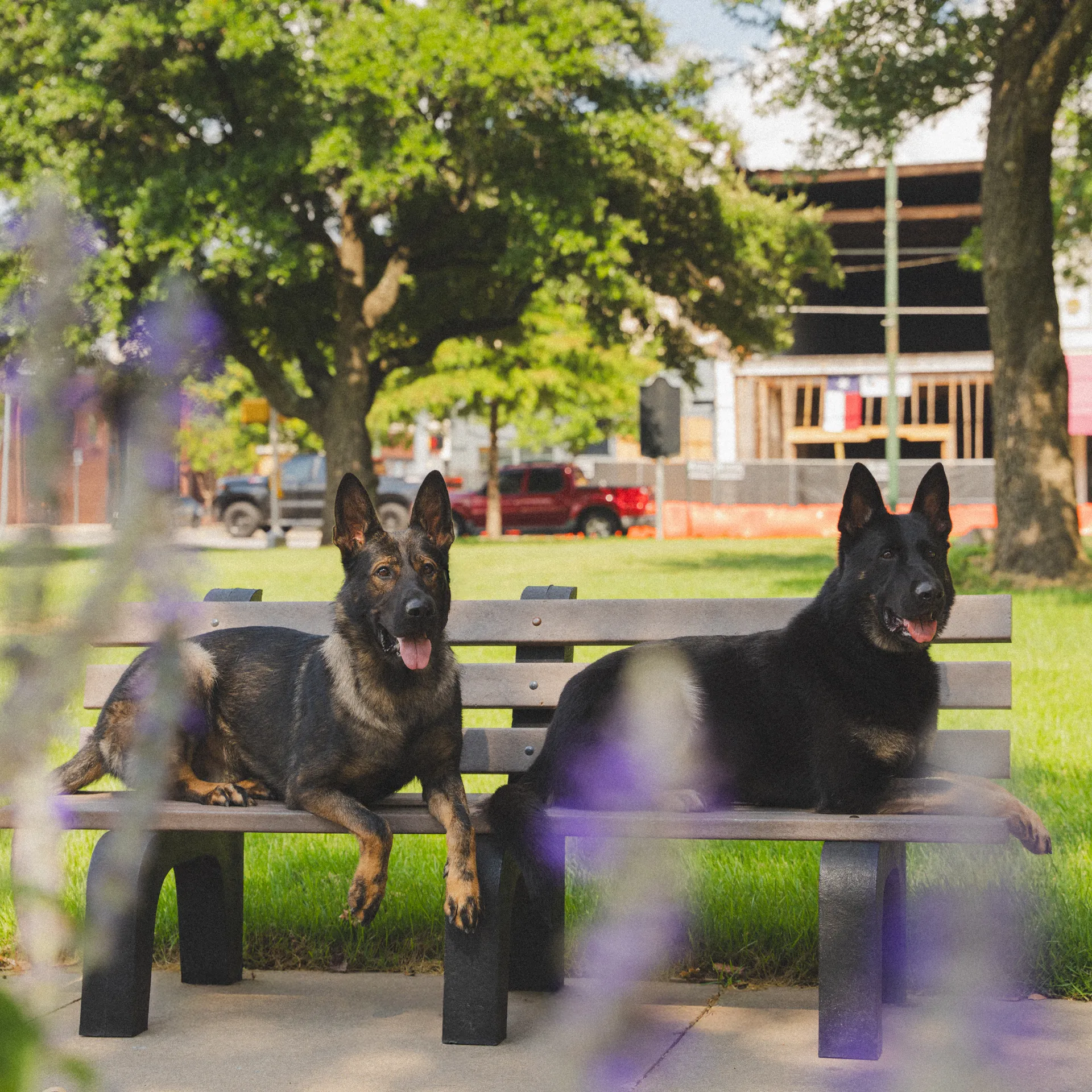
What a Trained Adult Protection Dog Lets You Evaluate
An adult offers evidence that a puppy cannot yet provide in the same way. You can observe mature size, existing behavior, established skills, and how the dog has responded to a range of experiences. A provider who knows the dog well should be able to explain its energy, affection, handling qualities, and household suitability.
That information makes a recommendation more specific. Instead of asking only what the dog may become, the family can examine what has already been observed and prepared. The evidence still needs scrutiny: age alone does not make a dog qualified, and “trained” should be explained through actual behaviors.
A trained adult protection dog still needs a thoughtful match
A finished skill set is not the same as a universal family fit. An active, highly engaged individual may suit one household and be too much for another. A dog comfortable with some animals may require a different assessment for a home with cats or livestock.
At Canine Protection International, we begin with the household before recommending an individual. Children, animals, guests, staff, travel, and the desired relationship all matter. The advantage of an adult is the opportunity to use more developed, dog-specific information in that judgment.
What Choosing a Puppy Actually Involves
Puppyhood offers the pleasure of participating in a dog's early life. It also asks the family to take responsibility for frequent care, appropriate social experiences, developing household habits, and adapting as the puppy matures.
For a family considering eventual protection work, there is an additional uncertainty. The adult temperament, physical development, health, and working suitability are not fully established at the beginning. Good breeding and thoughtful development matter, but they do not remove the need to reassess the individual over time.
The family should be comfortable with the possibility that the puppy becomes a much-loved companion without qualifying for protection. If that would feel like a failed purchase rather than a dog you still want to care for, reconsider the plan before bringing the puppy home.
The Uncertainty of Buying a Puppy and Waiting
When a family pays for a particular puppy and waits a year or two for it to be raised and trained, the commitment comes before the outcome can be demonstrated. Professional care can provide a thoughtful upbringing, but it does not remove the uncertainty about what that individual will become.
The important question is what happens if the dog develops differently from what you need. A good companion may not have the confidence or control required for protection work. A capable working dog may not have the temperament or everyday qualities that suit your household. More time invested does not, by itself, resolve either mismatch.
Before committing, understand whether you are purchasing that specific puppy regardless of its eventual suitability, or arranging for a qualified dog to be selected for you later. Ask what happens if the candidate does not qualify, how an alternative would be chosen, and what happens to your payment. A future placement based on a dog meeting defined standards is different from relying on one puppy to become the right dog.
Raising a puppy can be a rewarding choice for someone who wants that experience and will welcome the dog even if it never qualifies for protection work. For a family buying a finished protection outcome, we prefer to reduce that developmental uncertainty before making the recommendation.
Interest in protection should not rush development
A puppy needs age-appropriate care and guidance. Do not provoke guarding behavior, stage confrontations, or attempt protection exercises to discover whether it has potential. Discuss development with qualified professionals and keep veterinary guidance central to physical activity and health decisions.
For ordinary early social experiences, Dogs Trust's guide to puppy socialization explains the importance of helping a puppy become familiar with the world in an appropriate way. That work is part of raising a dog; it should not be confused with proof of future protection suitability.
Trained Adult vs. Puppy: Side-by-Side Comparison
These differences describe the decisions a family faces. They do not mean every adult placement is carefully prepared or every puppy will be difficult. Ask about the individual, the provider, and the support available in either case.
Is a Trained Adult Easier for a Busy Family?
A well-matched, prepared adult can reduce the amount of foundational development the family has to undertake. Existing household manners and clear handling instruction may make the transition more understandable than learning alongside a young puppy.
That benefit depends on the quality of the preparation and the fit. Buying an adult with unexplained behavior or receiving little instruction does not create the same experience. Ask what life with this dog will require and what the company has done to prepare it for your circumstances.
Busy should not mean unavailable. Even a highly trained dog needs time, exercise, care, and companionship. If the household has no practical plan for those needs, neither option is ready. Talk through work, travel, caregivers, and periods when the family is away before deciding.
At CPI, the aim is for the client to be an owner and handler, without needing a second occupation as a dog trainer. Clear preparation and personal delivery support that aim. They do not replace the family relationship that makes the placement worthwhile.
Will an Adult Protection Dog Still Bond with Your Family?
Yes, Absolutely. You do not have to have known a dog at eight weeks old to become important to it. An adult can form affectionate relationships through clear communication, care, shared experiences, and the life it builds with new people. We find that by the end of the first day of delivery, our fully trained adult protection dogs are starting to bond with the family, and by the third day of delivery the bond is even stronger.
Choosing a puppy solely from concern that an adult will never feel like yours can therefore lead you into a development commitment you did not actually want. A better question is which dog and ownership path suit the relationship you hope to have.
Our article on bonding with an adult protection dog explains the role of matching, handling transfer, affection, and daily routines. It also addresses the concern that a dog with a strong trainer relationship cannot develop a new family bond.
How Should Families Compare the Costs?
Compare the complete undertakings, not only the initial payments. A trained adult's price may reflect selection, development, health evaluation, matching, delivery, and support. A puppy's initial price leaves much of its future care and development outside the purchase.
The puppy route can involve professional help, veterinary care, equipment, and substantial family time, without a guarantee of protection qualification. It would be misleading to treat those unknowns as a fixed savings calculation or promise that either route will always cost less overall.
CPI's Elite Family & Estate Protection Dogs start at $100,000. The appropriate comparison is the specific written scope, the evidence behind the recommendation, and the responsibilities that remain with you. See our family protection dog cost guide for a practical proposal comparison.
What Becomes Clearer Around 8–12 Months
In our experience, the period around eight to twelve months often gives us a much clearer sense of who a dog is than early puppyhood does. Its confidence, social behavior, and responses to different environments become easier for us to assess meaningfully. We can make a more informed judgment about the foundation we would be building on.
This is one reason CPI generally purchases candidates at around twelve months old, sometimes slightly older. We want to understand the individual before bringing it into our program to develop its full potential. That is the beginning of our work with a candidate, not the age at which we automatically consider it a finished protection dog.
Dogs are still developing at that stage. Eight or twelve months is not a universal point of full maturity, and one evaluation never settles every question. We continue observing the dog throughout training and daily life before deciding whether it meets our placement standard.
How CPI Selects Dogs for Adult Placement
The young adults we purchase spend six months to a year with us, sometimes longer, in our training program. They live with us, go places with us, and develop through daily work and ordinary life. That sustained involvement gives us repeated opportunities to assess the qualities a family will experience after delivery.
CPI evaluates candidates selected for our own program before offering them as finished protection dogs. Every candidate must continue meeting our standards for health, family temperament, control, and suitability throughout its development with us.
If a candidate falls short, it will not be placed as a CPI protection dog, regardless of the time or money already invested. We seek an appropriate alternative role or home for that individual. Our puppy comparison should not be read as an offer to sell a puppy or promise that a client's existing puppy can become a CPI protection dog.
If you already have a dog or puppy and are considering a CPI adult placement, your existing animal becomes part of the matching process. Its personality, needs, health, and daily routine deserve attention alongside the new candidate's qualities.
Step-by-Step Guide to Choosing Between a Puppy and an Adult
Step 1: Separate your goals
Decide whether you primarily want the experience of raising a puppy, a prepared family companion with protection capability, or both. If those goals compete, identify which matters most. This prevents a sentimental image from deciding a practical commitment.
Step 2: Review the household's available time
Discuss who will provide daily care, attend instruction, and remain involved during travel or busy periods. Be honest about what the adults want to undertake. A realistic plan is more valuable than an optimistic promise to find time later.
Step 3: Decide how much uncertainty you can accept
Ask whether you would be content if a puppy matured into a companion without protection suitability. If demonstrated capability is essential to the decision, an evaluated adult may better match your expectations.
Step 4: Examine the individual evidence
For an adult, review temperament, health, everyday behavior, and complete demonstrations. For a puppy, discuss health, developmental support, and realistic expectations with the breeder and professionals involved. Neither a pedigree nor a marketing label replaces those conversations.
Step 5: Compare support and total responsibility
Clarify what the provider does before and after the dog joins your home. Understand the family's responsibilities, available instruction, current written terms, and any additional service costs. Compare the whole relationship, not simply the handover day.
Step 6: Choose the path you will enjoy living with
A good decision should make sense on an ordinary weekday. Choose the life you are ready to give a dog and the preparation that supports your expectations. If timing or fit is not right, waiting is a responsible option.
Adult vs. Puppy FAQs
Is a trained adult protection dog better than a puppy?
It depends on your goal. An evaluated, trained adult is generally the more direct choice when you want demonstrated protection capability and a known level of preparation. A puppy is appropriate when you want puppyhood and accept the work and uncertainty of development.
Can any well-bred puppy become a protection dog?
No. Breeding can inform expectations, but the individual must still develop suitable health, temperament, control, and ability. A responsible program continues evaluating those qualities. Good intentions and extensive training cannot guarantee every puppy will qualify for the same role.
Will an adult bond as closely with us?
An adult can form a close, affectionate family relationship. Puppyhood is not a requirement. The match, clarity of handling, quality of care, and enjoyable time together all matter. Avoid assuming that joining the family earlier automatically creates a better relationship.
Does fully trained mean there is no ongoing work?
No. You still provide care, exercise, companionship, and consistent handling. The distinction is that a prepared adult arrives with established skills and instruction for using them. Ask the provider what maintenance looks like in everyday life rather than assuming the dog needs no participation.
Can a puppy provide reliable protection immediately?
A puppy should not be treated as a finished protection dog. Physical and behavioral development are still ahead, and future suitability remains uncertain. Provide age-appropriate care and seek professional guidance instead of asking the puppy to take on adult working expectations.
Is the puppy route a guaranteed way to spend less?
No. A lower initial purchase price does not establish the total cost or guarantee the same outcome. Care, professional assistance, development time, and potential changes in suitability all affect the undertaking. Compare responsibilities as carefully as prices.
Does CPI sell puppies?
No. CPI does not sell puppies. We select, develop, and place fully trained adult protection dogs matched to each family. References to puppies in this article explain the differences between the two paths; they do not describe a puppy purchase or puppy-raising service offered by CPI.
How does CPI help a family decide?
CPI begins with a private consultation about the household, desired companionship, daily routines, and protection expectations. We explain the placement model and recommend a suitable individual when there is a sound match. You do not need to choose a dog before that conversation.
Choose the Experience as Carefully as the Dog
Puppyhood can be rewarding when it is the experience a family wants. A carefully selected adult offers a different advantage: more evidence about the individual and preparation for the role already under review. Neither path should be chosen on an assumption about bonding, price, or guaranteed potential.
To explore a personally matched adult placement, request a private consultation with CPI.