
TL;DR: The psychology of deterrence shows that preventing a threat is far more powerful than reacting to one. In this blog, you’ll discover how presence, especially through trained protection dogs, creates effective deterrence by influencing behavior before danger escalates.
When most people think about protection, they picture force. Strength. Confrontation.
But the truth is, the psychology of deterrence tells a different story. The most powerful protection isn’t about reacting to a threat; it’s about preventing one from ever happening.
In the world of home security deterrents, presence often matters far more than force. Whether it’s a visible camera, a warning sign, or a highly trained protection dog standing confidently at your side, what stops crime most effectively is perception.
Let’s explore how deterrence theory psychology explains why presence works, and also why it’s the foundation of modern protection.
At its core, the psychology of deterrence is about decision-making.
Criminal behavior is rarely random. It typically involves assessment:
This is where deterrence theory psychology comes into play. The theory suggests that people are less likely to commit a harmful act when the perceived risks outweigh the perceived benefits.
In other words, when consequences feel immediate and likely, behavior changes.
This is the foundation of deterrence in security. Instead of preparing to fight danger, smart protection focuses on making danger choose somewhere else.
There’s an important distinction between stopping a crime and preventing one.
Force is reactive. Deterrence is proactive.
Force comes into play once a threat has already escalated. Effective deterrence prevents escalation entirely.
The deterrence security principle operates on visibility and credibility. A threat must believe:
Without those perceptions, security becomes passive. With them, it becomes powerful.
Research consistently shows that visible security measures reduce crime rates.
Cameras mounted high. Signs warning of monitoring. Motion lights. A clearly marked alarm system.
These are all examples of deterrent security measures: tools designed to influence behavior before a crime occurs.
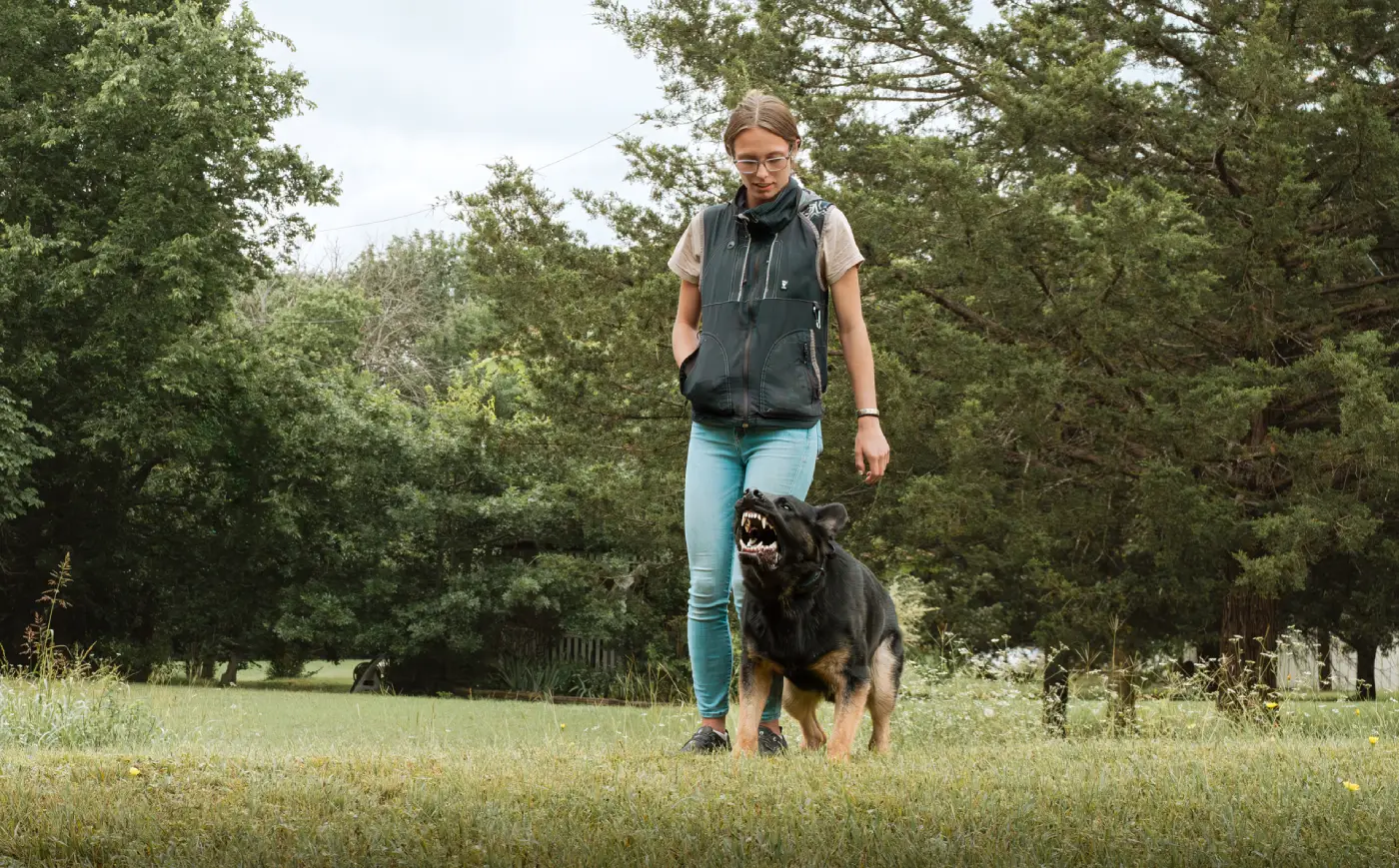
But there is one form of visible protection that triggers a uniquely strong psychological response: a trained protection dog.
Unlike static security systems, a protection dog is:
From a psychological standpoint, unpredictability increases perceived risk. A burglar may know how to disable an alarm system. They may know blind spots in cameras. But a living, trained canine adds a layer of uncertainty that dramatically shifts risk calculations.
That uncertainty is often enough to stop a threat before it begins.
The presence of a protection dog changes the environment instantly.
This is where physical security intersects with psychology.
A fence is physical security. A locked door is physical security. A protection dog standing calmly at the gate? That’s physical security combined with psychological dominance.
The dog doesn’t need to act aggressively. It doesn’t need to bark constantly. In fact, many elite protection dogs are composed and silent.
It’s the presence that matters.
Presence communicates:
That message alone often creates effective deterrence.
Smart protection relies on layered deterrence strategies.
No single element should carry the full burden of security.
Consider how layered deterrence in security works:
Warning signs, visible cameras, perimeter lighting.
An integrated alarm system and modern security systems that detect movement and intrusion.
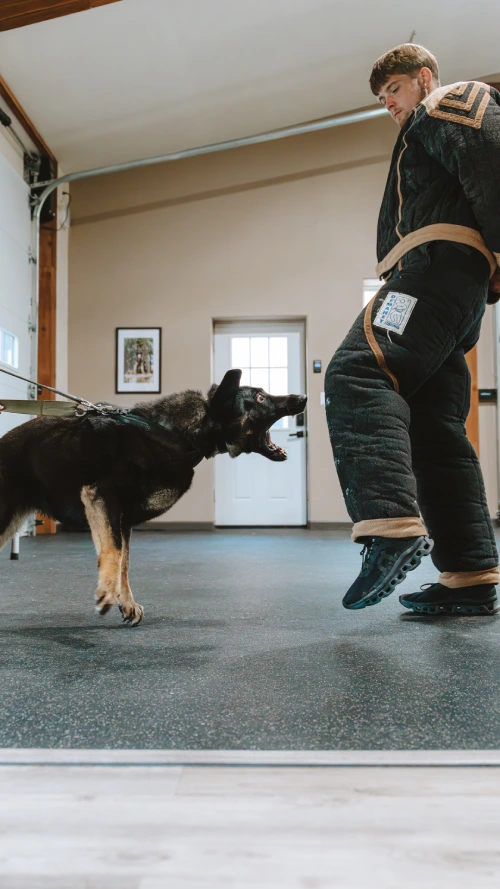
A trained protection dog that provides real-time, responsive security.
Each layer increases perceived risk. Together, they create a security posture that most threats simply avoid.
This layered approach reflects the deterrence security principle in action. The goal is not confrontation. The goal is prevention.
Technology is important. But technology is predictable.
A protection dog introduces something different: agency.
A dog can:
From a behavioral standpoint, this changes everything.
The psychology of deterrence relies on visible capability. A camera may or may not be monitored. An alarm system may or may not trigger immediately.
But a trained dog standing watch? That capability is unmistakable.
For potential intruders, this increases:
And when perceived risk rises high enough, rational actors disengage.
That’s effective deterrence.
There’s another layer often overlooked: peace of mind.
Homeowners don’t just invest in protection for physical safety. They invest for emotional security.
A well-trained protection dog provides:
Unlike some security measures that operate quietly in the background, a protection dog offers reassurance through presence.
This emotional dimension reinforces the psychological framework of deterrence. Confidence changes posture. Posture influences perception. Perception influences behavior.
Even in personal protection scenarios (such as public settings, travel, events) presence alone often prevents escalation.
One of the biggest misconceptions about protection dogs is that they are constantly aggressive. In reality, elite protection dogs are controlled, obedient, and highly trained.
They are not tools of force. They are instruments of influence.
The foundation of deterrence theory psychology is simple: people adjust behavior when consequences feel real.
A protection dog embodies that reality without needing to demonstrate force.
The dog does not need to engage. The engagement rarely needs to happen.
That’s the power of the deterrence security principle.
Traditional security focused on barriers. Modern security focuses on perception.
The most advanced security systems are designed to detect and respond. But the most advanced security mindset aims to prevent.
When we look at home security deterrents, we see a shift:
A protection dog represents the ultimate fusion of physical security and psychological strategy.
It communicates strength without hostility. It establishes boundaries without escalation. It creates safety without confrontation.
Force is loud. Presence is powerful.
When security relies solely on reaction, risk remains high. But when security is rooted in the psychology of deterrence, risk shifts away from you entirely.
That is the essence of deterrence in security.
True protection doesn’t start with conflict. It starts with influence.
And influence begins with presence.
For families, estates, and individuals who value both safety and discretion, the message is clear:
The strongest defense is often the one that never has to act.
That’s the power of effective deterrence, and why presence matters more than force.
Check out our list of available protection dogs!

.png)
