What Health & Temperament Testing Should a Family Protection Dog Pass?
What health and temperament testing should a family protection dog pass?
Back to the Blog
Short Answer: Protection Dog Health & Temperament Testing
A family protection dog should receive documented veterinary evaluation, orthopedic and laboratory screening, and repeated assessment of temperament in everyday life. At Canine Protection International (CPI), we combine those evaluations with months of living and working with each dog, then match its observed qualities to the family. Ask any provider what was tested, what daily life has shown, and why the individual dog is right for your household.
Health and temperament matter because the dog is joining a family for a life that extends well beyond training. Comfortable movement, stable behavior, normal daily function, and an appropriate household match all contribute to that relationship.
At Canine Protection International, neither pedigree nor protection ability compensates for an unresolved concern that makes a dog unsuitable. Evaluation continues throughout development. Our family protection dog buying guide explains where this fits in the larger placement decision.
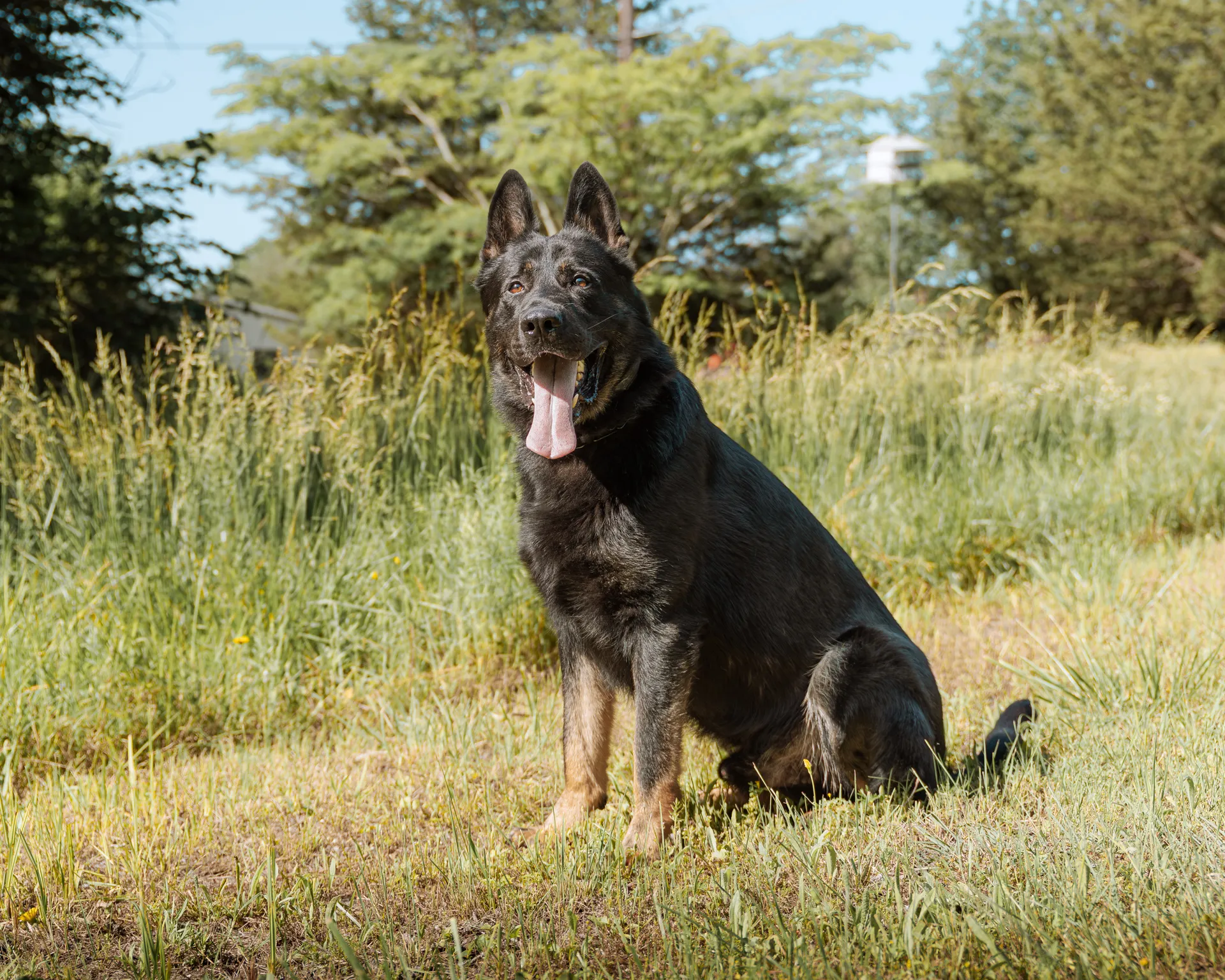
Health & Temperament Testing Should Describe the Individual Dog
A useful evaluation is tied to an identifiable dog and interpreted in context. At CPI, we consider the individual dog's health records alongside our firsthand knowledge of its movement, behavior, and daily life. Our general standards establish what we require; the particular dog's evaluation determines whether it meets them.
Ask who performed the evaluations, which methods were used, and whether any findings required follow-up. Confirm that the records correspond to the same dog. Dates and identification are practical details that make the information more meaningful.
Health and temperament testing is a continuing process
Tests record particular findings at particular times. Daily observation adds information about how a dog actually moves, eats, rests, interacts, and responds to its surroundings. Neither replaces the other.
CPI's standard combines documented screening with the complete picture of daily function. The young adult dogs we purchase spend six months to a year with us, sometimes longer, living with us, going places with us, and developing in our training program. A candidate must continue qualifying throughout that time. Passing an earlier evaluation never becomes a reason to overlook a later concern.
What CPI's Health Evaluation Includes
CPI's routine protocol includes orthopedic imaging and evaluation of the hips, elbows, and spine; degenerative myelopathy genetic testing; a complete blood count and blood chemistry; heartworm and infectious-disease testing; fecal testing; and a complete physical evaluation by our licensed veterinarian.
We also observe movement, appetite, digestion, energy, and stool quality throughout daily life. Additional diagnostics, including urinalysis, are pursued when medically indicated. The veterinarian's judgment determines the appropriate interpretation and any further investigation.
Buyers should avoid treating this as a shopping list where the largest number of tests wins. The relevant questions are whether the evaluation addresses the individual dog, whether the findings are understood, and whether the placement decision reflects them.
CPI's veterinarian
CPI works with Dr. Kent Julius, DVM, of Concierge Vet Club in the Dallas-Fort Worth area. Dr. Julius brings more than 20 years of veterinary experience, including ownership of two veterinary hospitals in the region. His practice provides personalized, mobile veterinary care in Frisco and surrounding communities. At CPI, his veterinary judgment complements our daily knowledge of each dog, helping us consider clinical findings alongside how the dog moves, feels, and functions throughout development.
Orthopedic Evaluation and Movement
CPI's orthopedic evaluation includes imaging of the hips, elbows, and spine, considered alongside how the dog moves and functions in daily life. When speaking with any provider, ask which areas were evaluated, how the images were interpreted, and whether the report is preliminary, final, or part of another assessment system.
The Orthopedic Foundation for Animals explains that hip screening uses radiographs evaluated within its grading process. Its elbow dysplasia information addresses a separate orthopedic area. A report about one joint should not be treated as a statement about every joint or the spine.
Different systems and veterinary evaluations should be named accurately. Do not assume that having radiographs taken means a dog holds a particular certification. Ask for the actual report and discuss its significance with a veterinarian familiar with the dog and intended activity.
Daily movement still matters. CPI observes the dog's comfort and function over time rather than relying only on a record of a past examination. If observation and documentation appear inconsistent, that is a reason for clarification, not for a buyer to attempt a diagnosis.
Laboratory Testing and Physical Examination
At CPI, a complete blood count and blood chemistry, heartworm and infectious-disease testing, fecal testing, and a complete physical evaluation by our licensed veterinarian are part of the routine protocol. We also observe appetite, digestion, energy, and stool quality in daily life. Additional diagnostics are pursued when medically indicated, with interpretation and further investigation guided by our veterinarian.
Ask when testing was completed and whether any follow-up was advised. A negative screening result should not be treated as permanent immunity from future exposure or disease. Ongoing preventive care remains part of ownership after placement.
The American Heartworm Society's owner guidance explains why testing and prevention are both relevant to heartworm care. Discuss the appropriate plan with your veterinarian, particularly when a dog's travel or residence changes. Do not choose medications or interpret screening intervals solely from a purchasing article.
This article is a buyer's guide to asking informed questions. Clinical interpretation, diagnosis, and treatment belong with a licensed veterinarian who can evaluate the actual dog.
What a Temperament Assessment Should Examine
For a family protection placement, temperament assessment must address life with people as seriously as protection work. Confidence, social behavior, responsiveness, and the ability to settle are central to the role.
CPI evaluates candidates across environments, surfaces, noises, movement, and ordinary household activity. We look for a naturally responsive dog that can remain clear under pressure without living in a constant state of suspicion.
Around children, CPI looks for a socially appropriate dog that naturally shifts toward calmer behavior. We also consider the animals already living in a client's home. Two cats live at our training center, so cats are part of the environment in which we develop and evaluate dogs. Those observations contribute to matching; we still discuss your own pets, their personalities, and the life they will share with the dog.
Recovery is part of the assessment
At CPI, we evaluate how a dog responds to unfamiliar environments and how readily it remains responsive to the handler and returns to calm. In protection work, our standard includes release, disengagement, and the ability to settle afterward. Ask any provider to explain and demonstrate that complete sequence, not only the most dramatic part of the work.
A single moment cannot reveal every behavioral tendency. Useful assessment combines repeated observation, the dog's history, professional judgment, and relevant situations. Buyers should ask the provider to explain the pattern rather than promise that no unexpected behavior could ever occur.
Household suitability is more specific than a general pass
At CPI, matching begins with your household, before we recommend a dog. We discuss children now and in the future, including a baby on the way, as well as pets, guests, staff, travel, daily routines, and handling experience. We then connect those needs to the temperament, affection, energy, and responsiveness we have observed in the individual dog. We usually recommend one dog, or occasionally two when both are equally well suited.
Ask any provider how its temperament assessment supports the specific recommendation for your family. At CPI, the answer draws on daily life with the dog and a detailed understanding of yours. A general label such as 'temperament tested' should lead to that explanation, not replace it.
What Each Kind of Evidence Contributes
The evidence is strongest when these parts support one another. If a summary makes a broader claim than the underlying records, ask for a more precise explanation.
Step-by-Step Guide to Reviewing a Dog's Evaluation
Step 1: Confirm identity and dates
Make sure the available records belong to the recommended dog and note when each evaluation occurred. Ask how identification is maintained across imaging, laboratory reports, and other documents. CPI's evaluation combines documented screening for the individual dog with continuing daily observation; both matter to our placement decision.
Step 2: Separate the categories
Review physical examination, orthopedic findings, laboratory testing, genetic results, and behavioral observations as related but distinct information. CPI includes each of these in its evaluation rather than treating a normal result in one area as an answer to every other question.
Step 3: Ask what required follow-up
Find out whether the veterinarian recommended additional testing, monitoring, or clarification and whether that work was completed. At CPI, additional diagnostics are pursued when medically indicated. An unresolved health concern that makes a dog unsuitable is not outweighed by its pedigree or training.
Step 4: Discuss the actual daily-life observations
Ask about movement, appetite, digestion, energy, rest, social behavior, and responses to relevant environments. At CPI, those observations come from dogs living with us and accompanying us in everyday life over months of development. Tell us which settings and relationships matter to your household so we can discuss the individual dog's fit.
Step 5: Obtain appropriate professional interpretation
Review clinical questions with a licensed veterinarian and ask the trainer to explain behavioral evaluation and matching. CPI's veterinarian guides the interpretation of health findings; Alex and Abby bring their firsthand knowledge of the dog's development and everyday behavior. Those roles complement one another.
Step 6: Understand the placement decision and written terms
Ask why the full picture supports this match and what would cause the company to decline it. CPI will not place a dog as a CPI protection dog if its health, temperament, control, or family suitability falls short, regardless of time or money invested. Review the current agreement separately for health provisions, responsibilities, and remedies.
Protection Dog Health Testing FAQs
What health and temperament testing should a protection dog have?
At Canine Protection International, evaluation includes imaging of the hips, elbows, and spine; degenerative myelopathy genetic testing; bloodwork, heartworm and infectious-disease testing, fecal testing, and a physical evaluation by our licensed veterinarian. We combine these with repeated observation of temperament, movement, and everyday behavior. Ask any provider how its findings support the individual dog's placement with your family.
Is one veterinary examination enough?
No. CPI does not rely on one veterinary visit as the complete evaluation. Our approach combines physical examination with orthopedic, genetic, and laboratory screening, plus ongoing observation throughout development. Ask the provider what was assessed beyond the examination and how any findings were followed up.
Does a clear DNA result guarantee a healthy dog?
No. CPI includes degenerative myelopathy genetic testing as one part of a broader health evaluation, not as a promise of lifelong health. Ask which test was performed and discuss its result with a veterinarian alongside the dog's other records and daily function.
Does imaging mean a dog is OFA certified?
Not necessarily. CPI's protocol includes imaging and evaluation of the hips, elbows, and spine. That description should not be read as a claim that every dog holds a particular organization's certification. Ask any provider which assessment system was used and review the actual report for the individual dog.
Can one temperament test prove family suitability?
No. At CPI, temperament assessment continues through months of living, training, and going places with the dog. We evaluate confidence, affection, responsiveness, behavior around children and other animals, and the ability to settle, then consider those qualities against your family's needs. Ask providers for that everyday context as well as any formal test result.
Does being good with dogs mean being good with cats?
No. Being comfortable with dogs does not by itself establish compatibility with cats. At CPI, two cats live at our training center, making cats part of the environment in which our dogs are developed and evaluated. We also learn about your cats and other pets before recommending a dog, and tailor acclimation during personal delivery to your household. Ask any provider about the individual dog's experience with cats and how it will support introductions. Our guide to dogs, cats, guests, and staff explores household integration in more detail.
What happens if a CPI candidate falls short later?
The dog will not be placed as a CPI protection dog. We may live with and train a candidate for months before deciding it does not meet our full standard. Health, temperament, control, and family suitability remain requirements regardless of our investment. We seek an appropriate alternative role or home for that individual. Ask any provider what happens when a concern emerges after training has begun.
Does health testing replace a written guarantee?
No. At CPI, testing and daily evaluation guide selection, while the current agreement defines the written terms of the placement. Ask us to clarify those terms before committing. After delivery, CPI provides lifetime support and direct access to Alex and Abby for questions and guidance; that continuing relationship does not replace the agreement's specific health provisions or remedies.
Look for a Complete and Understandable Picture
At Canine Protection International, health and temperament evaluation is part of knowing the dog well enough to recommend it for your family. Veterinary screening, months of everyday observation, and household-specific matching work together. Ask us what we have learned about the dog, how it meets our standards, and why we believe it belongs in your life. Our responsibility is to the success of that placement.
To discuss CPI's evaluation standards and a placement suited to your household, request a private consultation.