Family Protection Dog vs. Guard Dog vs. Police Dog vs. Sport Dog: Key Differences
Family Protection Dog vs Guard Dog: Key Differences
Back to the Blog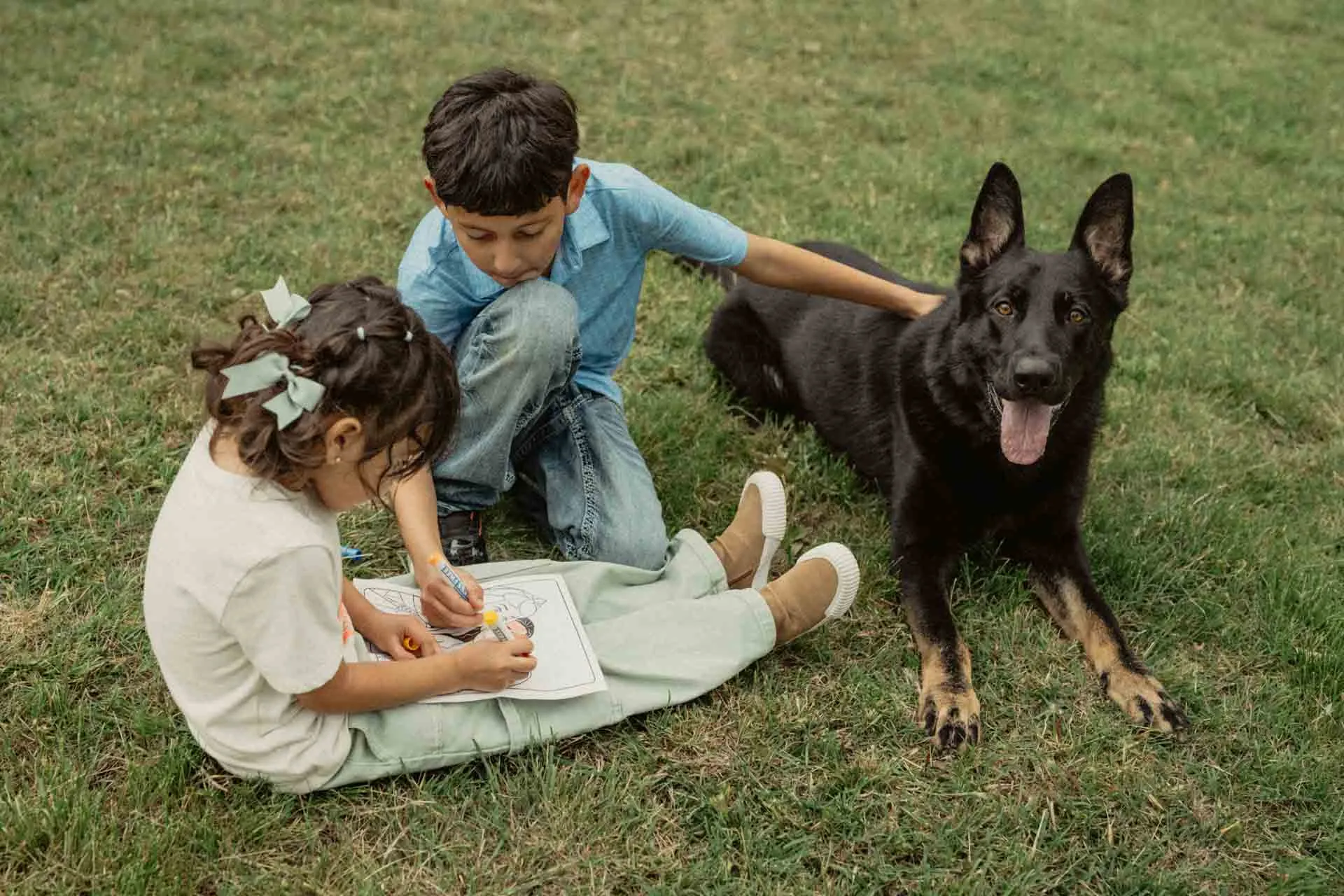
Short Answer: The Four Working-Dog Roles
A family protection dog is selected and prepared to live as a companion while providing controlled protection under handler direction. A guard dog is associated with guarding a place or boundary, a police dog with agency duties, and a sport dog with exercises assessed under competition rules. These roles can overlap, but none automatically proves suitability for a particular family.
The kind of work a dog has learned tells you something about its abilities. It does not, by itself, tell you whether that dog belongs in your home. Families comparing a protection dog, guard dog, police dog, or sport dog need to look beyond the label to the individual and the life it has been prepared to lead.
At Canine Protection International (CPI), the starting point is family life. The dog must be enjoyable to live with before its protection work matters. Our family protection dog buying guide puts that principle into the broader selection and purchasing process.
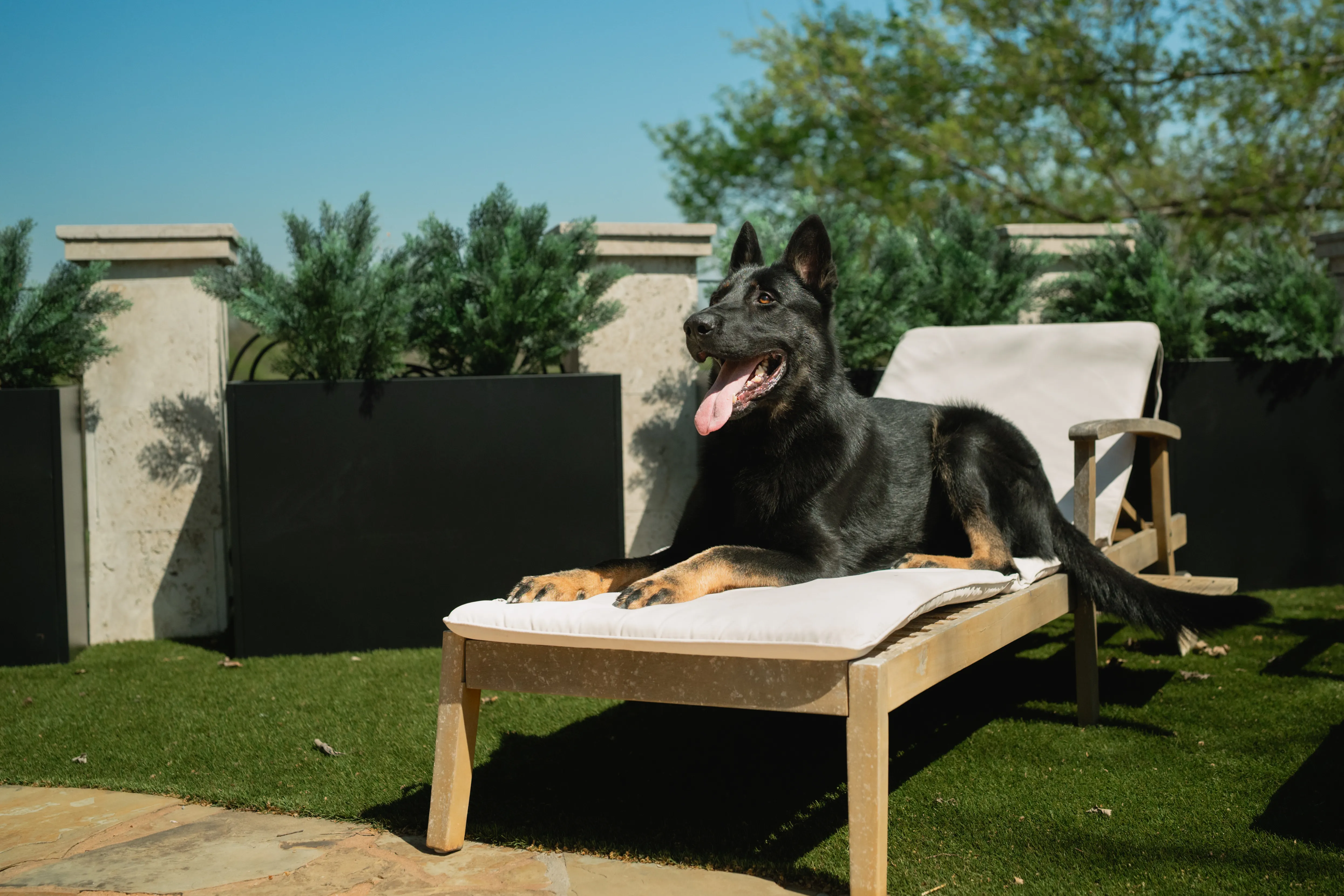
Family Protection Dog vs. Guard Dog: Start with the Intended Life
People often use “guard dog” casually to mean any dog that offers a sense of security. A family searching that term may actually want an affectionate companion who can accompany them at home and in public. Another buyer may mean a dog whose principal role is watching a commercial site.
Because the term can describe different expectations, ask the provider what it means in practice. Where does the dog live? Who handles it? What happens when visitors arrive? What is the dog expected to do when no handler is present? How is it called away from activity?
For a family placement, the answers must address ordinary life. A dog needs to fit around the people and animals who belong in the home, rest comfortably, and respond to the adults responsible for handling it. Guarding behavior alone does not establish those qualities.
Family protection dog vs. guard dog in a busy household
Consider a home with children, a housekeeper, a gardener, and friends visiting throughout the week. The household does not need a dog that treats routine movement as a reason for suspicion. It needs a suitable individual, clear handling, and a sensible plan for the different people coming and going.
A dog selected for that life should be evaluated around relevant situations, with its response explained in context. A photograph with a visitor is not enough. Ask how the dog behaves when the visit continues, people move around, and the handler asks it to settle.
The distinction is about preparation and suitability, not a claim that every dog described as a guard dog is inappropriate for families. Clarifying the intended role prevents two people from agreeing on a label while imagining very different dogs.
What Makes a Family Protection Dog Different?
A family protection dog has to meet two connected expectations. It needs the temperament and manners to be a companion, and it needs the ability and training for controlled protection. Neither compensates for the absence of the other.
At CPI, we look for confidence, affection, social appropriateness, and natural responsiveness to the handler. A dog should not live in a constant state of suspicion. Its preparation includes calm home behavior, everyday obedience, public environments where appropriate, and the ability to settle after activity.
Protection is handler-directed. We develop control through the beginning and end of an exercise, including release, disengagement, and return to calm. We do not position a CPI dog as an autonomous system that independently decides who poses a threat.
The final requirement is the family match. A capable, well-prepared dog can be right for one household and wrong for another. Energy, relationship style, other animals, children, travel, and the adults' handling confidence all affect the recommendation.
Police Dog vs. Family Protection Dog
“Police dog” describes work within a law-enforcement setting, not a single personality or an all-purpose qualification. Agencies use dogs for different functions. A detection dog's work and a patrol dog's work are not interchangeable, and the relevant handler training and operating context matter.
A police background may demonstrate substantial ability and professional preparation. However, a dog selected for police patrol duties is not necessarily the dog you would choose to live with. That background does not automatically establish how the dog lives with children, behaves with the family's other animals, or responds to a private owner's handling. Those questions require their own evidence.
It would also be inaccurate to assume every police dog is unsuitable around family members. Evaluate the actual dog and its history. Avoid using either admiration for police work or fear of the label as a substitute for household-specific assessment.
For a private placement, ask what additional evaluation and preparation have been completed for the intended home. Ask who will help the adults become comfortable with that dog. Operational experience and family compatibility are different forms of evidence, and the provider should explain both honestly.
Sport Dog vs. Protection Dog: What Does a Title Establish?
Working-dog sports can require considerable skill, consistency, and commitment. For example, the FCI's IGP rules assess tracking, obedience, and protection in defined trial exercises. A title documents an achievement within that framework. See the FCI's utility dog regulations for the scope of those disciplines.
That achievement deserves to be understood accurately. It is not a certificate that the dog has been prepared for every situation in a private household or that a new family can already handle it comfortably.
If a recommended dog has sport experience, ask what has been observed beyond the trial setting. How does it behave in a home? How does it respond to unfamiliar non-threatening people? What does it do after an exercise ends? What preparation supports the specific family's routines?
Sport experience can be part of a dog's background without defining the finished placement. Equally, an absence of sport titles does not excuse weak evidence of temperament, control, or capability. The relevant standard is the intended role and the demonstrated preparation for it.
Does the video show a finished dog or a sport exercise?
When a dog is presented as finished and ready for delivery, ask whether the footage supports that claim. Is it filmed on a training field in a familiar sport-style routine? Is the dog engaging an obvious Schutzdienst sleeve, the protective bite sleeve used in sport work? Those observations help identify what the video demonstrates, but they do not establish readiness for family protection.
FCI IGP regulations assess defined exercises, and the protection phase permits the dog to grip only the designated sleeve. That is a valid sporting task. A field or visible sleeve is not itself evidence of poor training; the concern is presenting that performance as sufficient proof of a finished family protection dog.
Ask for current, dog-specific evidence beyond that routine before making a placement decision. If a provider cannot demonstrate the household behavior and broader controlled protection work that the finished-dog claim implies, we would not recommend proceeding on the strength of that footage alone.
Comparing the Four Roles Side by Side
This table compares purposes, not quality rankings. Some individual dogs have experience in more than one category. A responsible evaluation explains what that experience proves and what it leaves unanswered.
How CPI Draws on Sport and Police Training
CPI draws on useful elements of different working-dog disciplines, including precision and handler communication developed in sport training and relevant scenario-based preparation used in police work. We adapt those elements to a different purpose: an affectionate, socially appropriate family companion with serious protection capability under clear direction.
One relevant concept is civil work. In this article, civil work means professionally controlled protection work that does not depend on a visible bite sleeve, a whip, or familiar movements from a decoy, the trained person playing a role in the exercise. The question is whether the dog understands the work beyond obvious equipment and rehearsed presentation while remaining responsive to its handler.
In appropriate professional scenarios, the role-player may be still or lying down rather than making conspicuous training movements. Stillness alone is not a threat or a reason for engagement. Handler direction, the context of the exercise, and the ability to disengage remain essential. These are professional training and evaluation situations, not tests for a buyer to stage with family or friends.
What Every Family Should See, Regardless of the Label
Everyday family behavior
Begin with the dog's behavior outside protection work. Ask to see the dog relaxing in a home, interacting appropriately with adults and children under adult supervision, and responding calmly to ordinary handling. Look for sustained everyday behavior, not only a posed photograph or a few seconds between exercises. Ask about the dog's lived experience and the professional assessment of its suitability for your household.
Protection work beyond obvious equipment
Ask the trainer to explain evidence of work beyond a visible sport sleeve, including controlled engagement with an undercover sleeve, a protective sleeve concealed beneath clothing, and handler-directed responses to a role-player without visible training equipment. No visible equipment does not mean an unprotected person should be bitten. Appropriate safety arrangements belong with qualified professionals.
An undercover-sleeve clip is not, by itself, proof of a finished dog either. It must be considered alongside everyday temperament, broader preparation, and complete demonstrations of control. The important question is what the individual dog understands and how reliably the handler can direct it, not how dramatic the footage looks.
Control through release and return to calm
A complete demonstration should make the handler's communication understandable and show the dog's response through the end of the exercise. Look for controlled engagement, release, disengagement, and a return to calm. A highlight reel that stops at the bite leaves a central part of the evaluation unanswered.
Transfer to the family
Finally, ask how those skills transfer to you. If a dog looks capable with its professional trainer but the family receives little instruction, a major part of the placement remains unexplained. CPI's training philosophy treats the transfer of understanding to the family as part of the work.
Health and ongoing care remain relevant across all four categories. A title, prior role, or strong training performance does not replace veterinary records and an assessment of the individual dog's function and wellbeing.
Step-by-Step Guide to Choosing the Right Role for Your Household
Step 1: Describe daily life before discussing labels
Write down where the dog will live, who will handle it, and which people and animals it will encounter regularly. Include ordinary details such as guests arriving during dinner or travel between homes. Those details define the preparation you actually need.
Step 2: State your expectations for protection clearly
Explain what you want a trained dog to contribute, and listen to the provider's explanation of appropriate handling and limits. If your expectation is independent threat assessment without your participation, clarify that before proceeding. That is not CPI's placement model.
Step 3: Ask the provider to define its terms
Have the company explain “guard,” “executive,” “family,” or “fully trained” through specific behaviors and services. Ask when the footage was recorded, what stage of training it shows, what is completed now, and what remains household-specific. Confirm how the new owners will learn to handle the dog.
Step 4: Review the dog rather than the category
Look at temperament, health records, relevant daily-life experience, and complete demonstrations. Distinguish verified observations from assumptions based on breed, source, role, or titles. Our guide to evaluating a protection dog training video helps make that review more practical.
Step 5: Evaluate the placement and support
Confirm who recommends the dog, who delivers it, and who answers questions afterward. A suitable role is only the beginning. The success of the relationship depends on the individual match and the people who remain responsible for helping it work.
Protection Dog Roles FAQs
Family protection dog vs. guard dog: which is better for a family?
If the goal is an affectionate household companion with controlled protection, evaluate dogs specifically selected and prepared for that life. The term “guard dog” can mean different things. Ask what the provider means and assess the individual dog's household suitability, training, health, and support.
Can a sport dog become a family protection dog?
A suitable individual may have a sport background, but sport experience alone does not complete the evaluation. The dog still needs appropriate temperament, health, preparation for everyday life, household matching, and instruction that enables the family to handle it comfortably.
Are police dogs automatically unsuitable for homes with children?
No. A job label does not determine every dog's behavior. It also does not establish suitability for your children. Review the individual dog's history, observed temperament, current role, and the professional assessment of the proposed household rather than drawing a categorical conclusion.
Is a naturally protective pet the same as a trained protection dog?
No. Barking, guarding a doorway, or reacting to a stranger does not demonstrate controlled protection. A family protection placement requires suitable selection, trained responsiveness, clear disengagement, and preparation for ordinary life. Instinct alone does not establish those skills.
Does the breed determine the dog's role?
Breed can help explain likely characteristics, but individual dogs vary. Health, temperament, development, experience, and handling matter to the final recommendation. Two dogs of the same breed can suit different homes and have very different preparation.
Should a family protection dog be suspicious of all strangers?
No. CPI selects for socially appropriate behavior with non-threatening people. A dog should be able to live around the guests and staff the family welcomes. Protection training should not make routine social life depend on constant suspicion or tension.
Can a dog be affectionate and still capable of protection?
Yes. Affection and serious capability are compatible in a properly selected and trained individual. CPI places equal importance on the dog being enjoyable to live with and remaining clear under handler direction. Warm family relationships are part of the intended role.
Does a sleeve-biting video prove a dog is ready for family protection?
No. A video of a dog biting a visible sport sleeve establishes only what is shown in that exercise. Ask for evidence of family suitability, controlled work beyond familiar equipment and routines, release, disengagement, and owner instruction. Even an undercover-sleeve demonstration is only one part of evaluating a finished family protection dog.
Choose the Dog for the Life It Will Lead
The right category helps you ask better questions. The right individual, prepared and supported appropriately, is what your family will live with. Define the role clearly, respect what each background actually demonstrates, and insist on evidence relevant to your home.
If you want a family member with serious capability under clear direction, request a private consultation with CPI to discuss the dog and placement that fit your life.
About the Author
Alex Bois is the owner and head trainer of Canine Protection International in North Texas. He oversees dog selection, training, household matching, and personal delivery, and remains directly involved in client support after placement.